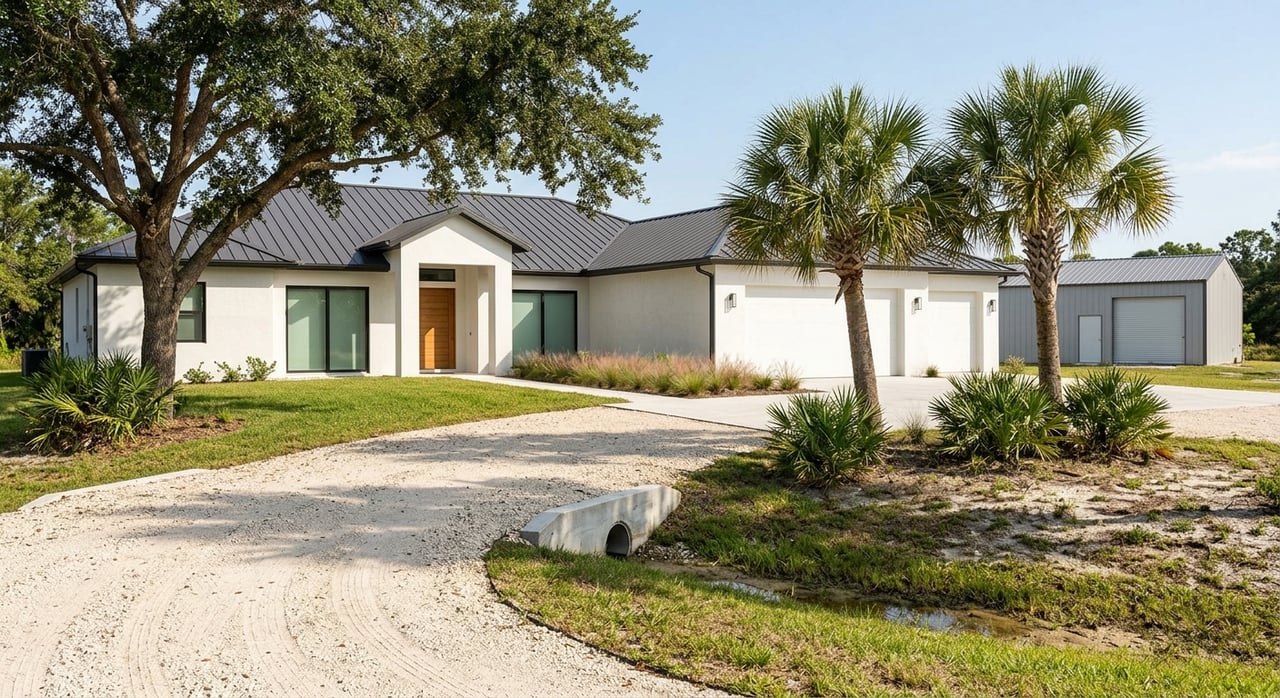
Dreaming about more space in Myakka City? Acreage can open the door to privacy, flexibility, and room to grow, but it also comes with questions you do not always face in a neighborhood setting. If you are considering a larger property, it helps to look beyond the home itself and focus on what the land can actually support. Here’s what to evaluate before you buy, so you can move forward with more clarity and fewer surprises.
Start With Utilities First
When you buy acreage in Myakka City, one of the first things to confirm is how the property is served. Manatee County Utilities provides potable water, wastewater, reclaimed water, and solid waste service in unincorporated Manatee County, but service availability is parcel-specific. That means you should verify what actually reaches the property instead of assuming the listing details tell the full story.
The county’s utility infrastructure map can help you review potable water, sanitary sewer, reclaimed water, fiber optic, traffic conduit, and street-lighting networks. Manatee County also notes that official signed-and-sealed record drawings control if map data conflicts with record documents. In simple terms, the map is useful, but final verification matters.
For many acreage homes, private well and septic systems are a major part of ownership. The Florida Department of Health says private well owners are responsible for making sure their water is safe to drink and strongly recommends annual testing for bacteria and nitrate. Septic review in Manatee County also remains an important due-diligence item.
Questions to Ask About Utilities
- Is the property on county water and sewer, or on a private well and septic system?
- Are there available utility records, septic permits, or inspection history?
- If a map shows nearby service lines, does that mean the parcel is actually connected?
- Are there any known limitations that could affect future improvements?
Confirm Legal Access Early
Acreage can look simple from the road, but access is not always as straightforward as it seems. In Manatee County, driveway and culvert permits for residential access in county public rights-of-way are handled by Public Works. Improvements in county property or public rights-of-way also require an approved right-of-way use permit.
This matters because the shape of a parcel does not always tell you where a driveway, culvert, or utility connection can go. A long road frontage may still come with restrictions tied to drainage, right-of-way requirements, or existing site conditions. Before you plan a gate, long drive, or additional utility work, it is smart to review the details carefully.
The county also states that structures cannot be placed in easements or buffers. So if you are imagining a barn, detached garage, workshop, pool, or fence, the usable area may be smaller than the raw acreage suggests.
What to Review Before Planning Improvements
- The current survey
- Recorded easements
- Drainage swales and buffers
- Utility corridors
- Driveway and culvert requirements
- Right-of-way permit needs
Check Zoning Before You Fall in Love
In Myakka City, acreage often appeals to buyers who want flexibility. You may be thinking about horses, a detached workshop, RV parking, a home office, or agricultural use. Those possibilities can be attractive, but they need to match the parcel’s zoning and future land use.
Manatee County directs buyers to use its GIS map to search zoning and future land use by parcel ID, owner name, or address. The county also states that setback rules are based on the property’s zoning district. That makes zoning one of the most important items to verify early in the process.
County code defines agricultural uses broadly and includes livestock and poultry raising, cattle grazing, pasturing of animals, and stables or equestrian centers. At the same time, some home occupations are only allowed without approval when they remain clearly residential, use no more than 25% of the home or 200 square feet of the first floor, and avoid outdoor storage, retail or wholesale transactions, fabrication, signage, and unusual traffic.
Agriculture also remains a meaningful part of Manatee County’s local economy. The county reports more than $500 million in annual agricultural impact and ranks among Florida’s top agricultural counties by sales. That local context helps explain why land-use questions matter so much in this part of the market.
Zoning Questions Worth Asking
- Is the parcel zoned for the way you want to use it now?
- Will your long-term plans fit the zoning too?
- Are horses, barns, workshops, or home-based work allowed?
- Do setbacks, easements, or overlays reduce the buildable area?
- Will a future improvement need special review or approval?
Treat Floodplain and Wetlands Seriously
On acreage, natural features are often part of the property’s character, but they can also affect how the land can be used. Manatee County’s floodplain section reviews building and development applications for flood-code compliance and can provide flood-information determinations and elevation certificates when available. Just as important, the county says areas outside the Special Flood Hazard Area can still flood and may account for about 25% of flood claims.
That means a favorable flood map does not end your research. On larger parcels, low areas, swales, ditches, streams, and drainage patterns can all affect future use and maintenance. If the land includes any of those features, they should be part of your decision-making from the start.
The county also advises property owners to keep banks clear of brush and debris if they are next to a ditch or stream. It further warns that dumping yard debris into ditches or streams can contribute to flooding. For acreage owners, routine land stewardship is part of the ownership picture.
Wetlands and conservation areas add another layer. Manatee County says parcels created after adoption of the Comprehensive Plan are subject to wetland protection policies, and environmental planning staff reviews wetland buffers, conservation easements, and related environmental issues during development review.
Understand Clearing and Tree Rules
Many buyers picture buying acreage and clearing part of it to create a homesite, pasture area, or expanded yard. In practice, that process may involve more review than expected. Manatee County says trees in the right-of-way require a right-of-way use permit in addition to a tree-removal permit.
The county’s tree-removal instructions also emphasize minimizing erosion and exposed soil during removal. If your plans include clearing land, changing landscaping, or opening up more usable space, it is important to confirm what is allowed before work begins.
Manatee County also says an erosion and sediment control plan is required for nearly every development project. Environmental planning staff conducts inspections related to wetland buffers, tree removal and replacement, and nuisance species removal. In other words, even routine-looking land changes can have a formal review component.
Assume Many Improvements Need Permits
One of the most common acreage mistakes is assuming that smaller improvements are informal. In Manatee County, accessory structures and fences require building plans plus a site plan or survey, and the Building Division lists those among standard permit types. That means sheds, barns, garages, generators, and fences should be treated as permitted projects.
Land changes can trigger review too. Under the county’s land-development code, even minor earthmoving can require review if it involves grade changes at a property line, moderate volumes of fill or excavation, or grading over a multi-acre area. Larger projects require site plans and permits.
If you are buying with a vision for future upgrades, this is where early planning really pays off. It helps you understand not just what you want to build, but what the property can realistically support.
A Simple Acreage Buyer Checklist
Before you move forward on a property in Myakka City, make sure you have answers to these basics:
- Confirm whether the property uses county water and sewer or a private well and septic system.
- Review available utility records, septic permits, and inspection history.
- Ask for the survey and identify easements, buffers, and drainage features.
- Verify driveway access, culvert requirements, and right-of-way issues.
- Check zoning, future land use, and setback rules.
- Confirm whether your intended uses fit the parcel.
- Review flood exposure, drainage patterns, and any low-lying areas.
- Identify wetlands, conservation easements, and tree-removal restrictions.
- Ask whether planned structures or grading work will require permits.
Why Local Guidance Matters
Buying acreage in Myakka City is often as much a land-use decision as a home purchase. The home may be the starting point, but access, utilities, zoning, floodplain status, and the true usable footprint of the land can shape your experience long after closing.
That is why local guidance can make such a difference. When you work with a team that understands Manatee County’s property landscape, you can ask better questions early and make more confident decisions before you commit. If you are exploring acreage in Myakka City and want experienced, relationship-first guidance, connect with The Paxton Group to start your search.
FAQs
What should you verify first when buying acreage in Myakka City?
- Start by confirming utilities, legal access, zoning, and whether the property uses county services or a private well and septic system.
How do utilities work for acreage properties in Myakka City?
- Utility service is parcel-specific, so you should verify whether county water and sewer are available or whether the property depends on a private well and septic setup.
Why does zoning matter for acreage in Myakka City?
- Zoning affects setbacks, future land use, and whether uses like horses, barns, workshops, or certain home-based work may fit the parcel.
Can flood risk affect acreage even outside a flood zone in Myakka City?
- Yes. Manatee County says areas outside the Special Flood Hazard Area can still flood, so drainage patterns, low spots, and site conditions still matter.
Do barns, fences, and sheds need permits in Manatee County?
- In many cases, yes. Manatee County lists accessory structures and fences among standard permit types and requires building plans plus a site plan or survey.
What should you review before clearing land on acreage in Myakka City?
- Review wetlands, buffers, conservation easements, tree-removal rules, and any erosion or sediment-control requirements before making changes to the site.