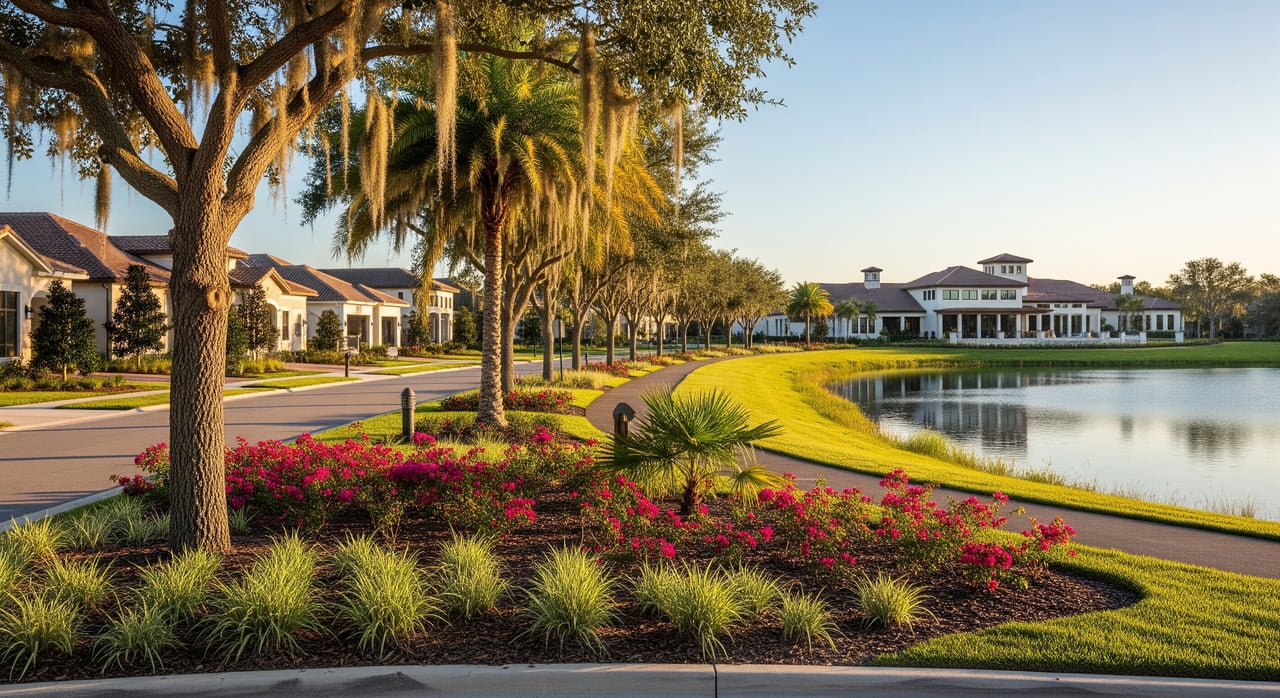
Curious what a master-planned community really means when you’re looking at homes in Lakewood Ranch? If you’re relocating or comparing neighborhoods, the term can feel vague until you see how it shapes daily life, costs, and resale. In this guide, you’ll learn exactly how Lakewood Ranch is organized, what fees to expect, how amenities work, and a step-by-step plan to tour villages with confidence. Let’s dive in.
Master-planned community defined
A master-planned community is a large, long-range development that blends homes with parks, trails, retail, schools, and infrastructure under one coordinated plan. The goal is to deliver a complete living environment, built in phases, with consistent standards and shared amenities. For general context on how planners think about these places, see the Urban Land Institute’s work on planned communities and neighborhood design (ULI).
Lakewood Ranch at a glance
Lakewood Ranch spans Manatee and Sarasota counties on Florida’s Gulf Coast. It is presented as a collection of distinct villages that share an overall identity, miles of trails and open space, and access to mixed-use town centers. You can explore official maps and neighborhood overviews on the Lakewood Ranch community website.
Because the community crosses county lines and is built in phases, practical details can vary by village. School assignment, utility providers, and some taxes or assessments may be different from one area to the next. When you compare homes, confirm these details for the specific address.
How Lakewood Ranch is organized
Villages and neighborhood structure
Lakewood Ranch is grouped into villages, each with its own design theme and housing mix. Within a single village, you may see different builders, lot sizes, and architectural controls. This is why narrowing your search by village is essential. It helps you align on lifestyle preferences, HOA rules, lot types, and proximity to town centers.
Builders and new-construction options
Multiple national and regional builders operate here, with model homes inside the villages. Each builder sets its own contracts, standard features, upgrade packages, and warranty terms. Ask for the written warranty, typical construction timeline, and the exact list of included features before you commit. If you are considering a quick move-in home, confirm what is complete versus what will be finished after closing.
Amenities you can expect
Amenities exist at both village and community scales.
- Village-level: pools, parks, playgrounds, community rooms, pocket greens.
- Community-scale: town centers, regional retail and dining, recreation centers, golf clubs, and extensive trail systems.
Some amenities are public within mixed-use centers, while many are for residents or club members only. Club access and costs vary, so verify rules and budget items for each village.
Governance basics: HOAs, CDDs, and clubs
Nearly every neighborhood has a Homeowners Association that enforces community standards and maintains common areas. To understand owner rights and board authority, see Florida’s HOA framework in Chapter 720, Florida Statutes.
Many areas also use Community Development Districts to finance and maintain major infrastructure like roads, drainage, and master amenities. CDDs issue bonds and collect assessments, often on your property tax bill. You can learn more about how CDDs function in Chapter 190, Florida Statutes.
Some villages are also served by private golf or social clubs. These may require initiation fees and monthly dues. Club costs are separate from HOA dues and are optional in many, but not all, cases.
What it costs to own
Recurring fees you should check
- HOA dues: Cover village-level common areas, landscaping in some villages, and community services. Billed monthly, quarterly, or annually. Amounts vary with the amenity package.
- CDD assessments: Repay bonds used to fund infrastructure and maintain some master facilities. Often shown as non-ad valorem assessments on your property tax bill. Amounts and schedules vary by district.
- Club membership: Initiation and ongoing dues for private golf or social clubs, when applicable. Typically separate from HOA dues.
- Utilities, landscaping, insurance: Utility providers can differ by village. Some HOAs include yard maintenance. Insurance costs depend on the home and coverage; check what the HOA master policy covers versus the owner’s responsibility.
One-time and contingent costs
- Special assessments: HOAs and CDDs can levy assessments for capital projects or budget shortfalls, as allowed by their governing documents.
- Transfer and administrative fees: HOAs or management companies may charge fees during closings.
- Financing and underwriting: Lenders review HOA and CDD structures. Pending litigation, inadequate reserves, or unclear assessments can affect loan eligibility. Get the full disclosure package early.
Where to find the numbers
Request documentation for the exact home or lot you are considering. Focus on:
- HOA: CC&Rs, bylaws, current budget, reserve study, recent financials, meeting minutes, insurance certificate, and rental or pet rules.
- CDD: Engineer’s report, bond documents, annual budget, and current assessment schedule.
- Clubs: Membership agreements, initiation fee schedule, dues, and any planned capital assessments.
For properties in Manatee County, you can verify tax bills and non-ad valorem assessments, including CDDs, through the Manatee County Property Appraiser. For Sarasota County parcels, check the corresponding county resources. Always confirm details for the specific address rather than relying on averages.
How the master plan shapes daily life
Lifestyle benefits
Life in a master-planned setting emphasizes convenience and consistency. You typically have easy access to parks, trails, pools, and village programming. Many areas are near town centers with shops and services, which can be a time-saver and a social anchor if you are new to the area.
Rules and trade-offs
HOA standards protect curb appeal and long-term appearance, which supports neighborhood consistency. That same consistency limits certain exterior changes. Higher amenity packages usually come with higher HOA or club costs. In newer phases, you may experience ongoing construction nearby, while established pockets often offer mature landscaping and a settled feel.
Resale considerations
In a large community like Lakewood Ranch, each village functions like its own micro-market. Reputation, location, amenity packages, and builder quality can influence resale values. Buyers respond positively to transparent fees, clear CDD timelines, and strong reserve funding. Treat comps village by village for the most accurate read on value.
Buyer roadmap for Lakewood Ranch
Step 1: Filter by what matters
Use these decision filters to narrow villages efficiently:
- Location and commute: distance to work, health care, airports, and highways; note county differences for services.
- Schools: verify public school assignment with official district maps, and note proximity to private or charter options.
- Home type and lot size: target single-story or two-story, preferred lot widths, and maintenance expectations.
- Amenities: decide what is essential versus optional, like pools, trails, club access, or nearby shops.
- Governance tolerance: decide how strict you want CC&Rs to be, whether a CDD is acceptable, and if you prefer included yard care.
- Builder preferences: shortlist floor plans and builder reputations, new versus resale preferences.
- Budget: include purchase price, HOA and CDD dues, club costs, taxes, insurance, and utilities.
Step 2: Questions to ask on tours
- For the builder:
- What is included in the base price, and are any upgrade packages mandatory?
- What written warranties are provided, and what is the typical completion timeline?
- After closing, who handles landscaping, irrigation, and drainage responsibilities?
- For the HOA or seller:
- What are current HOA dues and the latest budget, and is there a recent reserve study?
- Are any special assessments pending or recently approved?
- What are rental and pet rules?
- Is there a CDD, and what is the current assessment amount and remaining term?
- Are there any lawsuits or compliance issues involving the HOA?
- For clubs:
- Is membership mandatory, optional, or required for certain sub-neighborhoods?
- What are initiation fees, current dues, and any planned capital assessments?
Step 3: Plan tours and evaluate
Visit at different times of day and week to observe traffic, noise, and amenity use. Bring a standardized checklist for each village that covers proximity to your daily needs, visible construction activity, condition of common areas, posted HOA rules, and how model homes compare with resales. Ask for the master plan map and phasing plan so you understand what will be built nearby in future phases.
Step 4: Nail down the details
During your contingency period or before you go under contract, collect the HOA resale certificate, governing documents, and current budgets. Verify CDD assessment amounts and terms with county records and the district documents. Confirm school zones with the district for the specific address. If buying new, review the builder’s warranty and punch list process, and consider third-party inspections at key construction milestones.
Ready to explore?
If you want a clear, low-stress path through Lakewood Ranch, partner with a local team that knows each village, the fee structures, and the builders. We can help you prioritize villages, compare HOA and CDD details side by side, and plan efficient tours that match your lifestyle and budget. When you are ready, reach out to The Paxton Group for a personalized game plan.
FAQs
What is a master-planned community in simple terms?
- It is a large, phased development that integrates homes with parks, trails, schools, retail, and infrastructure under one coordinated plan, supported by shared rules and amenities. For background, see the Urban Land Institute’s guidance on planned communities (ULI).
How do HOA dues and CDD assessments differ in Lakewood Ranch?
- HOA dues fund village-level services and common areas, while CDD assessments repay bonds and maintain large-scale infrastructure. HOAs are governed by Chapter 720, and CDDs are governed by Chapter 190 of Florida law.
Are club memberships required in Lakewood Ranch?
- It depends on the village. Some golf or social clubs are optional, others may be required by certain covenants. Always review the club’s membership documents and the village’s HOA rules for clarity.
Where can I verify a home’s CDD amount in Manatee County?
- Check the property’s tax bill and non-ad valorem assessments through the Manatee County Property Appraiser, and request the district’s assessment schedule and bond documents for the parcel.
Do school assignments vary by village in Lakewood Ranch?
- Yes, because the community spans more than one county and continues to grow. Confirm the specific address with the school district’s official maps, since assignments can change as new neighborhoods open.
Is buying new or buying resale better in a master-planned community?
- It comes down to preferences. New builds offer customization but may include nearby construction activity. Resales provide established streetscapes and quicker move-in, and can reflect village reputation and amenity maturity.